Pixelart einer Katze vor einer Holzwand mit Pflanzen und einem gelben Schmetterling
184 × 184 px, 1:1

Erik Reitbauer, 17, Softwareentwickler aus Österreich.

Ich schreibe Software, meistens in Kotlin, und veröffentliche das meiste davon als Open Source. Server, Tools, Bibliotheken und das eine oder andere Experiment.

Offen für Praktika und Jobs als Entwickler neben der Schule.

→ Projekte/ SucheKlick Zeichnen überspringen

Osmium

Steuert eine Flotte von Minecraft-Agenten ohne Oberfläche, die gemeinsam eine große Schematic bauen.

Warum es hier ist. Mein bisher größtes System. Eine Person lädt eine Schematic hoch, Osmium teilt sie in Segmente, gibt jedem Agenten seinen Teil, und ein Web-Dashboard verfolgt jeden Agenten live.

Agenten melden sich über einen Host-Prozess an, gehen oder fliegen zu ihrem Segment und setzen es Lage für Lage. Das Dashboard zeigt Live-3D-Ansichten, eine gemeinsame Karte, die die Agenten beim Bewegen erkunden, Inventare, Telemetrie und ein Audit-Log. Die Konfiguration liegt zentral und wird Hosts bei jeder Neuverbindung erneut übergeben.

352 Commits341 davon meineAug. 2026 erster CommitStand Sep. 2026

  • TypeScript
  • Kotlin
  • Vue
  • Spring Boot
  • PostgreSQL
  • mineflayer

Readme

Osmium

Das Problem. Ein Abzug der Datenbank darf nie reichen, um die Minecraft-Accounts der Flotte zu übernehmen.

Die Lösung. Osmium hält die Zugangsdaten nie und meldet sich nie selbst an. Das Backend schickt einem Host nur einen Setup-Befehl; der Host meldet den Account auf einem Rechner an, den sein Besitzer kontrolliert, und schickt nur Benutzernamen und UUID zurück. Hosts verbinden sich von sich aus zum Backend, statt angesprochen zu werden, und ist ein Host nicht erreichbar, gilt der Zustand seiner Agenten als unbekannt statt offline.

Orchestration for a fleet of Minecraft agents that build a large schematic together. An operator uploads a schematic, picks the agents to work it, and Osmium splits it into segments and hands each agent its own slice. The dashboard shows what the fleet is doing: blocks left, throughput, the traffic every host moves, what needs attention, and what happened.

Agents can be sent anywhere by clicking the map or the 3D view. They walk there, or fly where the server allows it, and build what they are given one course at a time: stairs the right way round, slabs on the right half, doors hinged on the side they were drawn on.

Modules

ModuleWhat it isState
backend/Spring Boot 4.1 / Kotlin. Auth, accounts, hosts, agents, schematics, build plans and jobs, and the WebSocket hosts dial into.Built, 695 tests
frontend/Vue 3 / Vite SPA. Operator dashboard, the build pipeline, the live world viewer, the charted map and the storage breakdown.Built, 665 tests
host/Runs on a machine you control, holds the Minecraft credentials and the proxies, drives the agents. TypeScript, on mineflayer.Connects, plays, walks or flies where it is sent, reports its world, inventory and neighbours, streams what it sees, and builds the pieces it is given, 702 tests
testserver/A Paper server and the rig that builds on it: a schematic made of nothing but the block states that are hard to place, built for real and read back.Two scripts; see its README
host/ → osmium-linkThe host's own command line: the accounts it can log in with, and the proxies it can route through.Built

The one idea worth knowing

Osmium never holds Minecraft credentials, and never performs the login.

The backend sends a host a setup_agent command; that host logs the account in by whatever means it prefers and reports back only the resulting username and UUID. A full database dump therefore reveals which accounts you run, not the ability to run them.

That constraint shapes everything else: how agents are addressed, why hosts dial out instead of being connected to, and why a host being unreachable makes an agent's state unknown rather than offline.

FLEET_CONNECTIVITY.md is the design document, credential custody, the wire protocol, liveness, chat, and the alternatives that were rejected and why.

Running it locally

Needs JDK 25, Node 24 and Docker.

# 1. Postgres
docker compose -f backend/docker-compose.yml up -d

# 2. Backend on :8080
cd backend && ./gradlew bootRun          # gradlew.bat on Windows

# 3. Frontend on :5173, proxying /api to the backend
cd frontend && npm install && npm run dev

# 4. Optional: a mock host, once you have registered one and copied its token
cd backend && OSMIUM_HOST_TOKEN=osm_host_1_… ./gradlew mockHost

The mock host speaks the real protocol over the real socket, it connects, reports agents, telemetry and chat, fetches segments and places blocks, so the whole pipeline can be exercised without a Minecraft account. It is a development convenience, not a stand-in for the host program.

Sign in with admin / admin. Those are development defaults and are seeded only while the users table is empty, override OSMIUM_BOOTSTRAP_USERNAME / OSMIUM_BOOTSTRAP_PASSWORD, and OSMIUM_JWT_SECRET, before running this anywhere real.
Clay

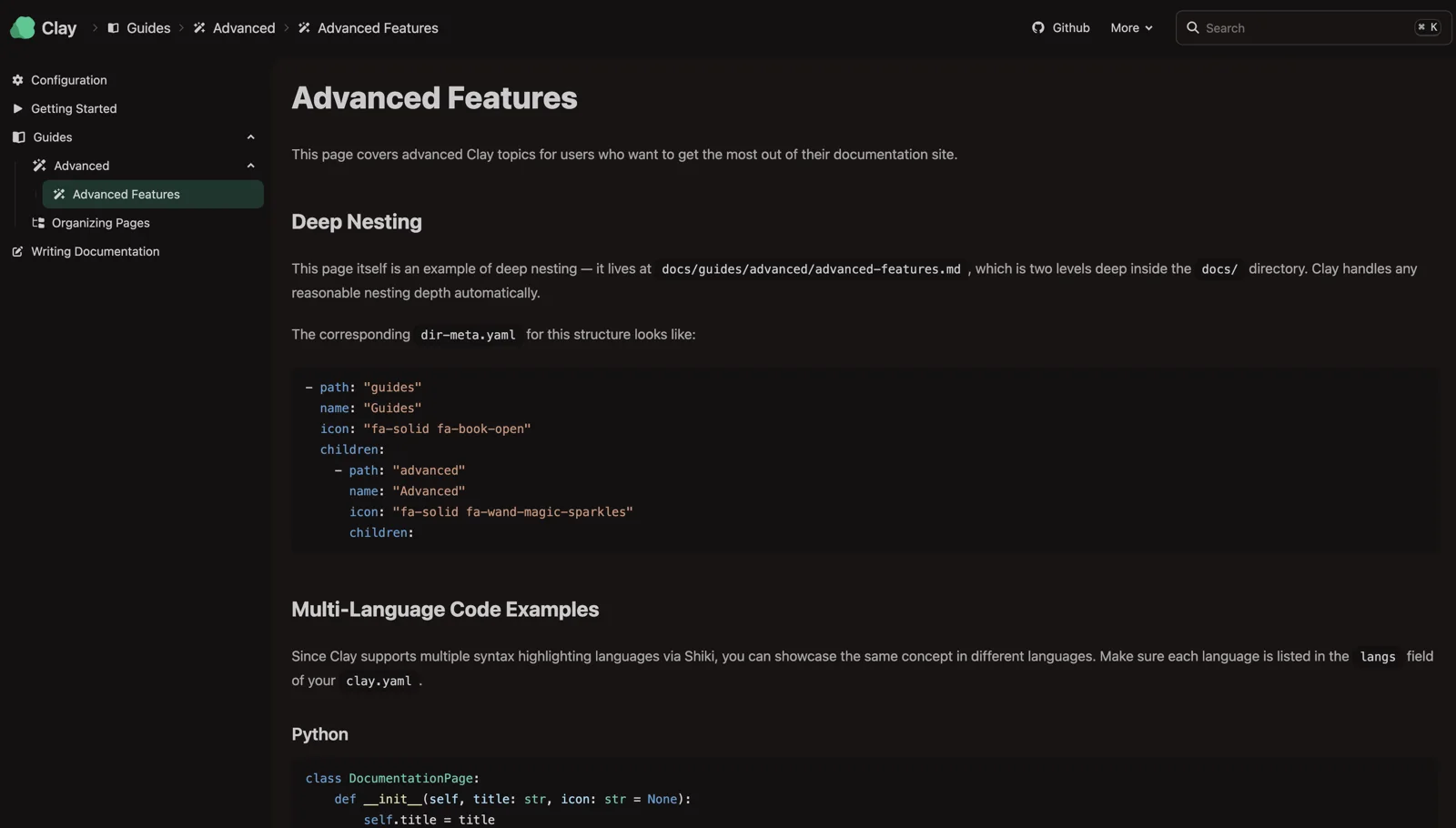
Ein Dokumentations-Framework, das sich in ein bestehendes Repository einfügt.

Warum es hier ist. Eine komplette Toolchain, die ich unter einer eigenen Organisation entworfen habe und pflege. Ein Frontend mit Vue und Nuxt plus ein Go-CLI, das aus einem Ordner voller Markdown eine fertige Website macht.

Die Dokumentation liegt als einfaches Markdown in docs/. Clay Oven durchsucht sie, schreibt die Navigationsstruktur und bündelt sie mit einem fertig gebauten Clay-Frontend. Eine clay.yaml legt Titel, Navigationsleiste, Sprachen und Startseite fest.

3 Repositories51 Commits5 SterneStand Sep. 2026

  • Vue
  • Nuxt
  • TypeScript
  • Go
  • Shiki

Readme

Clay

Das Problem. Die meisten Doku-Tools verlangen, dass ein Projekt einen Static Site Generator und dessen Build übernimmt.

Die Lösung. Das Clay-Frontend kommt fertig gebaut und liest zur Laufzeit alles aus zwei Dateien: clay.yaml, von Hand geschrieben, und clay-structure.yaml, die Clay Oven, ein Go-CLI, beim Durchsuchen von docs/ erzeugt. Ein Repository bekommt nur Markdown und eine Konfigurationsdatei dazu.

A documentation framework for developers, built on Nuxt.js and Vue.js. Clay provides a structured, auto-generated system for displaying documentation written in Markdown.

Clay is not a static site generator. It is a documentation framework that integrates into existing projects with minimal effort.

Capabilities

  • Auto-generates documentation structure from the contents of the docs/ directory.
  • Modern UI via daisyUI and Tailwind CSS.
  • Rich Markdown parsing via marked.js and syntax highlighting via Shiki.
  • Customizable through a single clay.yaml config file.

How It Works

The Clay frontend is pre-built and loads everything it needs from a couple of config files, so it drops into any repository with minimal effort.

.
├── docs/                    # Documentation directory (Markdown)
│   ├── my-doc.md
│   └── my-sub-directory/
│       └── nested-doc.md
├── clay.yaml                # Main configuration file
├── clay-structure.yaml      # Structure file (generated by Clay Oven)
└── logo.svg                 # Optional logo

Configuration

clay.yaml configures the title, navbar, languages, and landing page:

title: "Demo"
favicon: "logo.svg"
baseURL: "/"
navbar:
  logo: "logo.svg"
  links:
    - name: "Homepage"
      icon: "fa-solid fa-house"
      link: "https://example.com"
index:
  title: "Welcome to the Demo"
  icon: "fa-solid fa-rocket"
langs:
  - "python"
  - "js"

clay-structure.yaml defines the navigation tree and is generated automatically by Clay Oven, the companion Go build tool.

The Clay Toolchain

  • Clay, the Vue/Nuxt documentation frontend.
  • Clay Oven, a Go CLI that scans your docs, generates structure files, and bundles them with a Clay distribution into a ready-to-deploy site.
  • Clay Example Repo, a fully working example project.

Forkcast

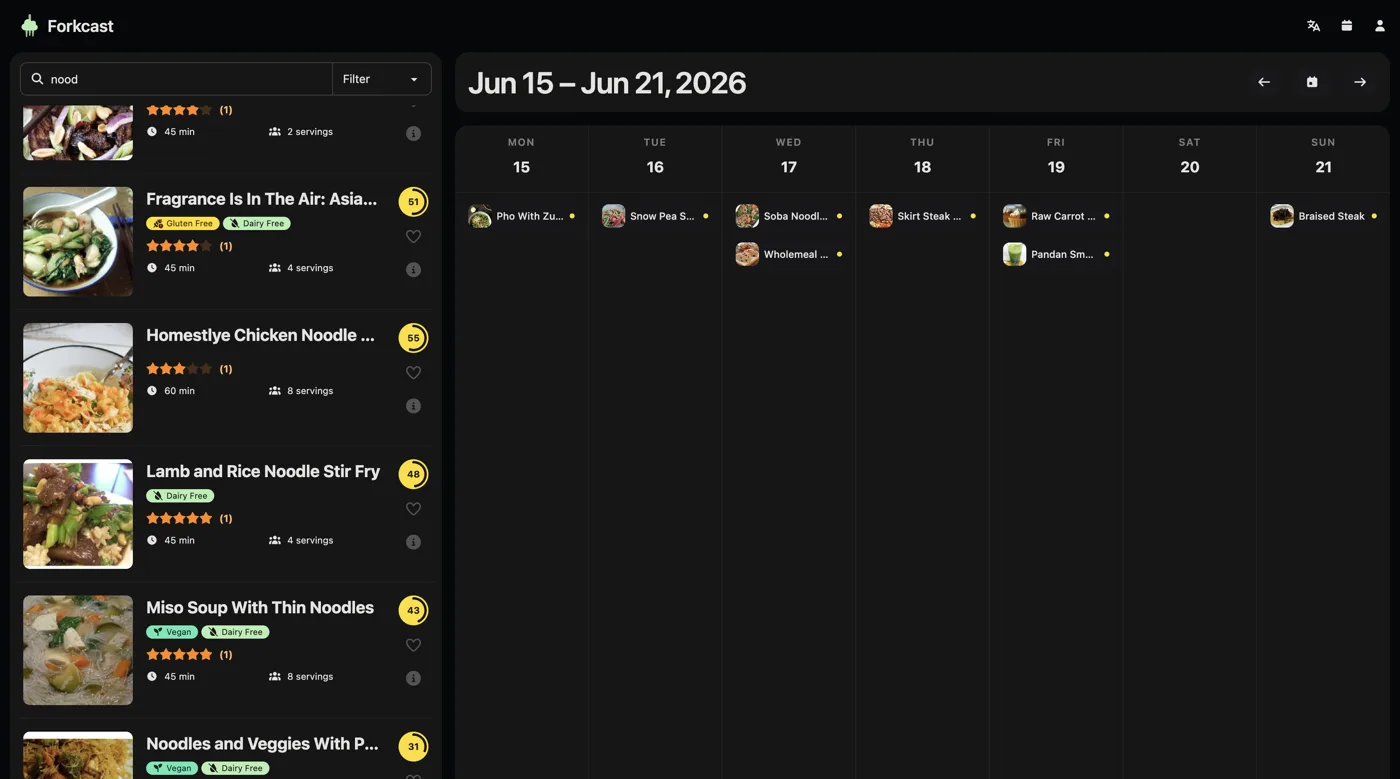
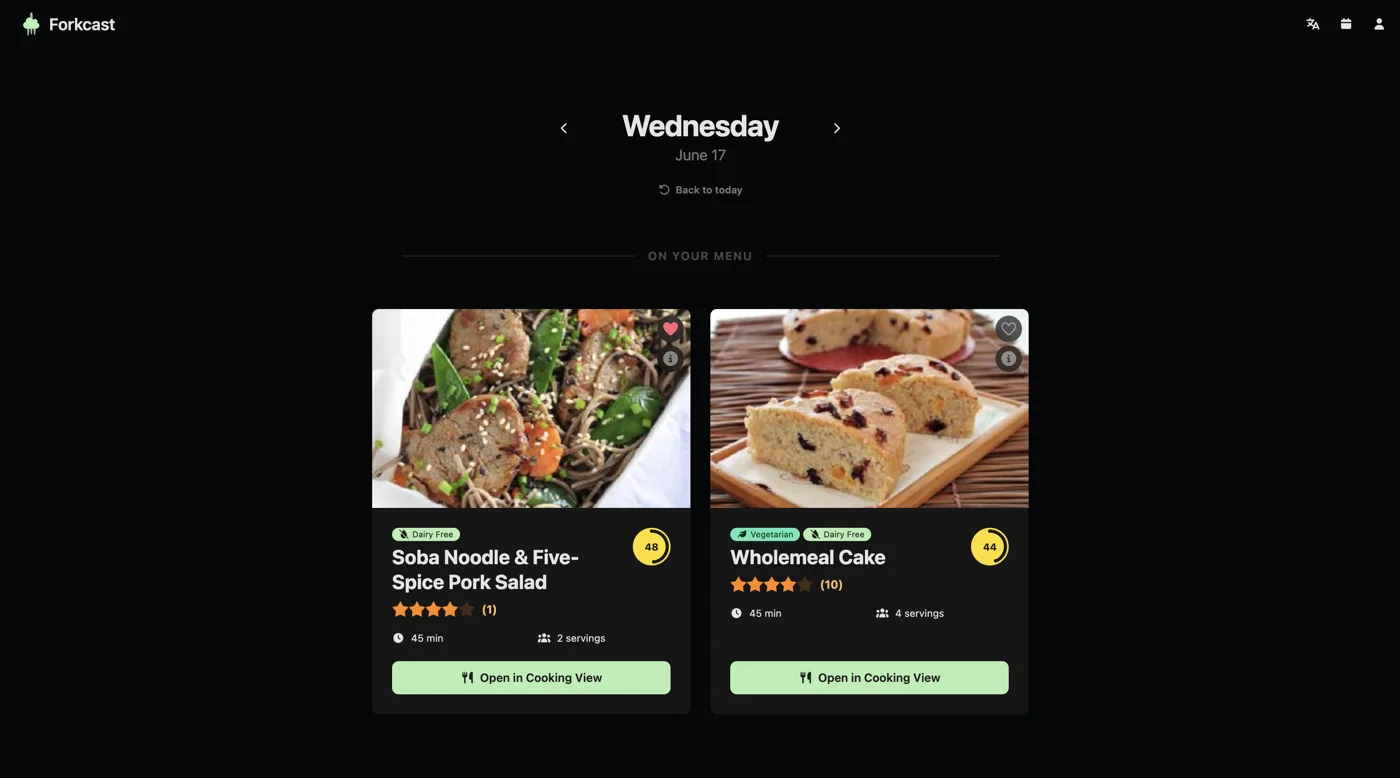
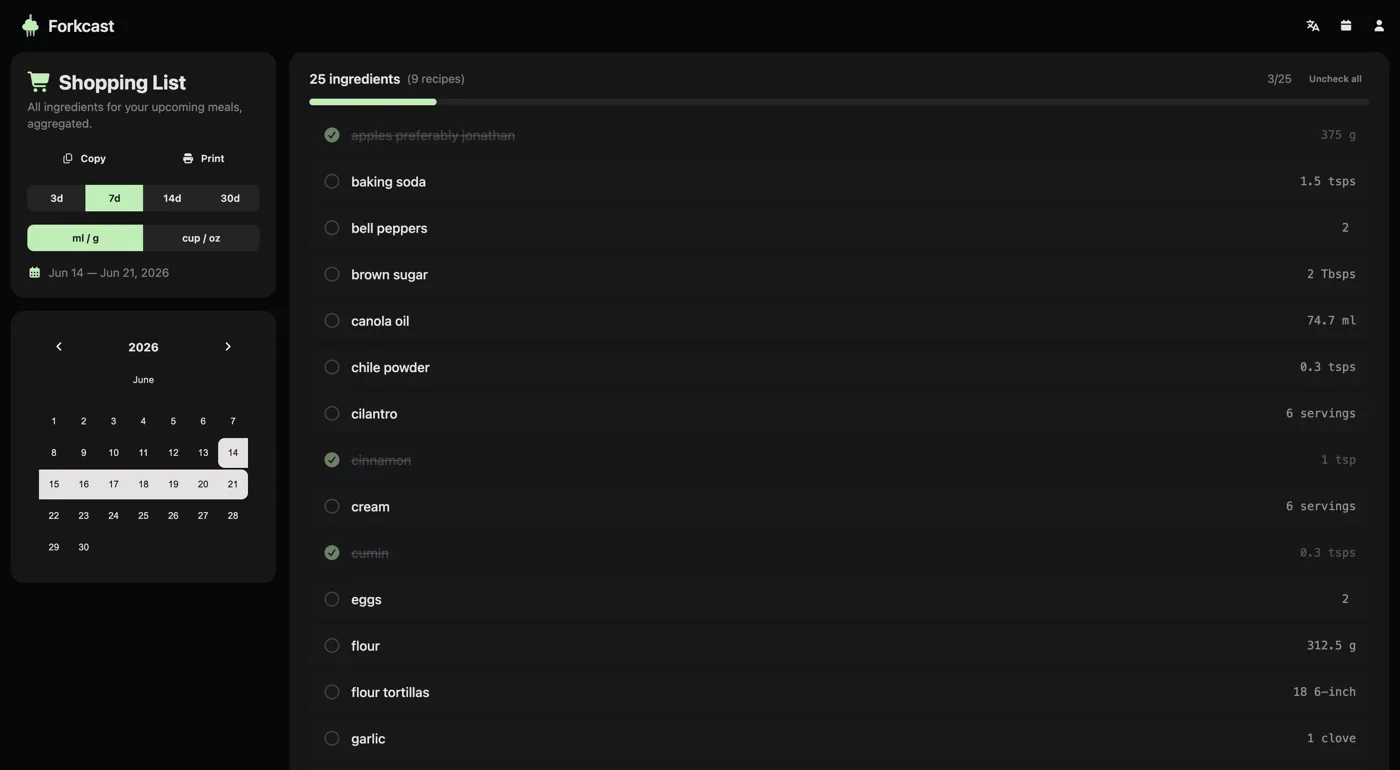
Essensplanung mit einer Woche per Drag and Drop und einer Einkaufsliste, die sich selbst schreibt.

Warum es hier ist. Ein Teamprodukt mit echter Oberflächenarbeit. Planen per Drag and Drop, Zutatenlisten über Rezepte hinweg zusammengeführt, Freunde und neun Sprachen, auch von rechts nach links.

Die Rezepte kommen von der Spoonacular-API. Portionen rechnen die Zutatenmengen um, gleiche Zutaten werden über die Woche summiert, und was schon zu Hause ist, lässt sich abhaken.

473 Commits196 davon meine4 Personen9 SprachenStand Sep. 2026

  • Nuxt
  • Vue
  • Pinia
  • TypeScript
  • Express
  • SQLite

Readme

Forkcast

Das Problem. Eine Woche voller Rezepte listet dieselbe Zutat immer wieder, in Mengen für unterschiedlich viele Personen.

Die Lösung. Die Einkaufsliste entsteht aus dem Wochenplan: Mengen werden auf die Portionen jeder Mahlzeit umgerechnet, gleiche Zutaten über die Woche zusammengeführt und summiert, und was schon zu Hause ist, lässt sich abhaken oder reduzieren.

Forkcast is a web application that digitizes and simplifies meal planning. Instead of juggling paper lists, it combines a drag-and-drop weekly calendar with a smart shopping list, recipe discovery, and a small social layer around friends.

Features

Meal Planner & Calendar

  • Interactive weekly calendar as the core of the app.
  • Drag & drop recipes onto a weekday, categorized as breakfast, lunch, dinner, or a free-text label.
  • Portions scale ingredient amounts to the number of people.

Smart Shopping List

  • Generated automatically from the weekly plan.
  • Identical ingredients across recipes (e.g. onions) are merged and summed.
  • Stock check: tick off or reduce quantities for items already at home.

Discovery & Social

  • Home page acts as an inspiration feed with a daily highlight.
  • Friend network: add friends by username, send/accept/decline requests.
  • Privacy: each user chooses whether their weekly plan is public or private.

Recipes & Personalization

  • Spoonacular API as recipe source, with detailed ingredients and nutrition.
  • Search with filters, favorites, and per-recipe ratings.
  • Allergy / dietary filters applied to recommendations.
  • 9 UI languages including right-to-left (Arabic, Hebrew).

Architecture

Monorepo with two independently deployed apps:

PartStackDeploy
frontend/Nuxt 4 (Vue 3), Pinia, TailwindCSS 4 + DaisyUI, i18nStatic site → GitHub Pages
backend/Express 5, better-sqlite3, JWT, SpoonacularDocker image → GHCR

The frontend is a static SPA: it talks to the backend REST API at /api, holds the JWT in sessionStorage, and renders the dashboard client-side. The backend owns auth, the SQLite database, recipe caching from Spoonacular, and email (verification / password reset).

Quick Start

Run the backend and frontend in two terminals:

# Backend (REST API on :3000)
cd backend
cp example.env .env        # fill in JWT_SECRET, SPOONACULAR_API_KEY, ...
npm install && npm start

# Frontend (Nuxt dev server on :8080)
cd frontend
npm install
npm run dev -- --port 8080

Team

Kerimcan Yagci, Lukas Grünzweil, Erik Reitbauer and Nico Haider, as a summer project in school.

Backbone

Ein Framework für Spigot-Server mit Kotlin-Skripten, die sich im laufenden Betrieb neu laden lassen.

Warum es hier ist. Serverlogik ändern ohne Neustart. Skripte bekommen ihren eigenen Event-Bus, Befehle, Inventar-Oberflächen und Speicher und werden an Ort und Stelle neu geladen.

118 Commits6 Sterne123 DownloadsStand Sep. 2026

  • Kotlin
  • Kotlin Scripting
  • Coroutines
  • Spigot
  • SQLite

Readme

Backbone

Das Problem. Jede Änderung an der Serverlogik bedeutete einen Neustart des Minecraft-Servers.

Die Lösung. Die Logik steckt in Kotlin-Skripten, die mit /bb scripting reload an Ort und Stelle neu kompiliert und geladen werden. Als sustained deklarierte Eigenschaften behalten ihren Wert über das Neuladen hinweg, sodass ein Skript dort weitermacht, wo es war.

Backbone is a powerful and flexible plugin for Spigot-based Minecraft servers. Its core idea: write, test, and update server logic on a live server without restarts, dramatically speeding up the development lifecycle.

Whether you are an admin adding custom features with simple scripts or a developer prototyping new ideas, Backbone gives you the tools to be more productive.

Features

  • Hot-Loadable Scripts: Write and reload Kotlin scripts without restarting the server.
  • Advanced Scripting: Inter-script imports, Maven dependencies, and custom compiler options.
  • Event System: A custom event bus that complements Bukkit's, with more control inside scripts.
  • Command Framework: A simple but powerful system to create commands directly from scripts.
  • Storage Abstraction: Flexible storage with SQLite databases and typed configuration files.
  • GUI Framework: A declarative framework for building interactive inventories.
  • Custom Items & Entities: Stateful items with abilities and custom entities via the goals API.
  • Display Entity Rendering: Create custom visuals in the world.
  • PlaceholderAPI Integration, HTTP Client DSL, memory-leak detection, and much more.

Getting Started

  1. Download the latest release and drop the .jar into your server's plugins directory.
  2. Start the server, Backbone generates its folders automatically.
  3. Write custom logic in .bb.kts script files inside scripts/.

Requires Minecraft Java 1.21.11+, a Spigot-based server (Spigot, Paper), and Java 17+.

Scripting Example

Every script uses the lifecycle DSL for hooks and event listeners:

lifecycle {
    // 'sustained' properties persist across script reloads.
    var counter by sustained(0)

    onLoad {
        println("Script loaded! Counter: $counter")
    }

    // Fires every server tick while the script is enabled.
    listener<TickEvent> { event ->
        counter++
        if (counter % 20 == 0) {
            Backbone.PLUGIN.server.onlinePlayers
                .forEach { it.sendMessage("Count: $counter") }
        }
    }
}

Scripts can pull Maven dependencies with @DependsOn, share code through .bbu.kts utility scripts, define commands, build GUIs, and talk to each other through inter-script messaging, all hot-reloadable with /bb scripting reload.

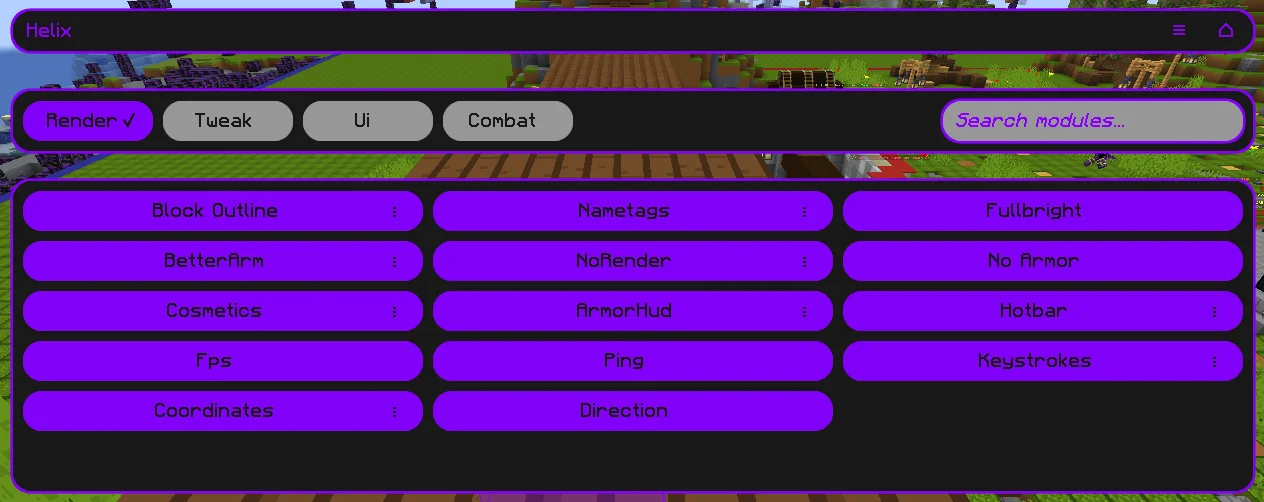
Helix

Ein Quality-of-Life-Mod für Fabric.

Warum es hier ist. An echte Spieler ausgeliefert und wird noch immer heruntergeladen.

Kostenlos und Open Source. Themes, Akzentfarben und eine Reihe kleiner Funktionen, die das Spiel angenehmer machen.

1.454 Downloads16 Follower25 CommitsStand Sep. 2026

  • Kotlin
  • Java
  • Fabric

Readme

Helix

Das Problem. Serverbetreiber brauchen einen Weg, Module abzuschalten, die sie nicht erlauben, ohne dass Spieler ihre Installation ändern.

Die Lösung. Der Server schickt eine Plugin-Nachricht auf dem Kanal helix:config mit einer JSON-Liste von Modul-IDs; Helix schaltet diese Module ab, bis der Spieler neu beitritt. Ungültiges JSON und unbekannte IDs werden ignoriert.

Helix is a QOL Mod that aims to improve your experience by adding various features. Helix is free and open source, forever.

Installation

Helix requires the Kotlin language adapter and the Fabric API to work correctly.

How to install, step by step

  • Download the latest release of Helix, the matching Fabric API and Kotlin language adapter
  • Put all 3 mods in your mods folder
  • Make sure you have the correct java version installed (17)
  • Make sure you have the fabric loader installed
  • Launch the fabric loader
  • Have fun!

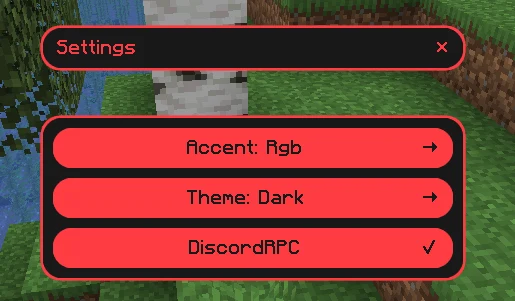
Accent colours

Rgb, orange, red, green, yellow, pink, purple and blue.

Themes

Dark and light.

In-Game features

  • Crystal Optimizer Optimized the placing and breaking of crystals clientside to improve crystal speed (removing broken crystals on the client...)
  • Block Outline Changes your block outline and adds optional entity outlines
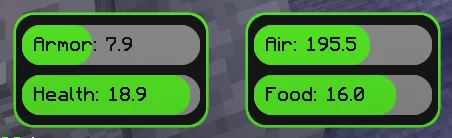
  • Armor Hud Shows you your armor on the screen without having to open your inventory
  • Autosprint Presses the sprint key for you
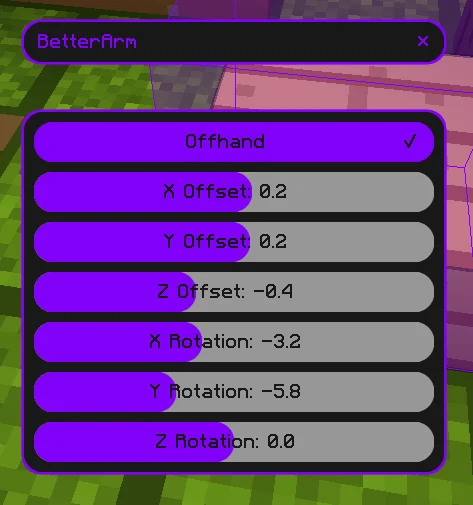
  • Better Arm Changes the rendering of your In-Game hand
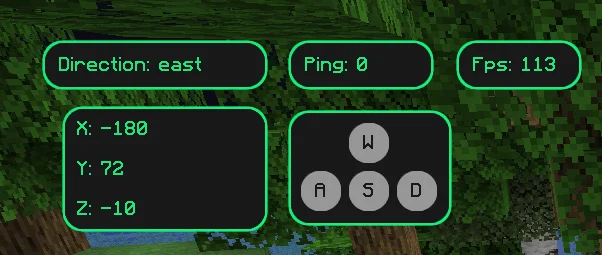
  • Coordinates Shows you your coordinates in the world
  • Cosmetics Render cosmetics clientside, for free
  • Directions Shows in what direction you are facing
  • Fps Display Shows your current Fps
  • Fullbright See in the dark
  • Hotbar Changes several status bars to literal bars
  • Keystrokes Shows what keys are being pressed
  • Nametags See your own nametag and add information to it
  • No Armor Hides your armor clientside
  • No Render Disables the rendering of certain things
  • Ping Display Shows your current ping
  • Chat Format Create gradients without leaving Minecraft. Can also solve simple math, for example <solve>1+2*(27-5)/5<solve>

Commands

  • /helix Opens the main UI
  • /gmc player Puts you or the optionally specified player in creative mode (only works if you have permission on the server since we are just redirecting commands)
  • /gms player Puts you or the optionally specified player in survival mode (only works if you have permission on the server since we are just redirecting commands)
  • /gma player Puts you or the optionally specified player in adventure mode (only works if you have permission on the server since we are just redirecting commands)
  • /gmsp player Puts you or the optionally specified player in spectator mode (only works if you have permission on the server since we are just redirecting commands)

Discord Presence

Shows some information about the server or world you are on to your friends on discord

For Developers and Server Owners

The following example code can be used to block modules from being used on your server. In the future, there may be more options for configuring the mod via the server.

Json Structure for the payload

This is the structure to use in the payload of the message sent to the player. Invalid json and incorrect module ids will be ignored. You can find the module ids in the respective modules. The ids can always be found in the header of the module and will always be in the following scheme: moduleName.

{
  "disabled": [
    "armorHud",
    "autoSprint"
  ]
}

Sending the configuration json in your plugin

This code can be put for example in the onJoin listener. Once disabled, modules stay disabled until the player rejoins the server. Then they need to be disabled again.

<player>.sendPluginMessage(<plugin-instance>, "helix:config",
     <json-payload>.toByteArray()
);

Mehr

Bibliotheken und ältere Experimente.

Aether

Socket-Transport mit Binär-Codec, kotlinx.serialization und Coroutines.

  • Kotlin
  • Coroutines
  • kotlinx.serialization

konvert

Eine kleine Bibliothek zum Parsen von JSON.

Content Automation

Erzeugt kurze Videos mit Sprachausgabe und automatischen Untertiteln.

  • Kotlin
  • Python
  • ffmpeg
  • Whisper

Beiträge

RSS
  1. Changing a Minecraft server without restarting it

    Backbone lets server logic live in Kotlin scripts that reload while the server keeps running. How the lifecycle DSL keeps state across reloads.

    backbone, kotlin, minecraft

    lesen

  2. Why Osmium never holds a Minecraft login

    Osmium runs a fleet of Minecraft agents, but its backend never sees their credentials. That one rule shaped the protocol, the liveness model and how hosts connect.

    osmium, architecture, security

    lesen

/ backbone, kotlin, minecraft

Changing a Minecraft server without restarting it

Developing plugins for a Spigot server usually means the same loop: change code, build a jar, restart the server, rejoin, test. Backbone removes the restart. Server logic lives in Kotlin scripts (.bb.kts) that are compiled and reloaded while the server keeps running.

One lifecycle per script

Every script declares what happens when it loads and which events it listens to:

lifecycle {
    // 'sustained' properties persist across script reloads
    var counter by sustained(0)

    onLoad {
        println("Script loaded. Counter: $counter")
    }

    listener<TickEvent> {
        counter++
    }
}

/bb scripting reload swaps in the new version of every script without touching the rest of the server.

Keeping state across reloads

Reloading would be much less useful if every counter, cache or cooldown reset each time. Properties declared with sustained(...) keep their value when the script is reloaded, so you can change behaviour while the state stays where it was.

More than single files

  • Scripts can pull Maven dependencies with @DependsOn.
  • Shared code goes into utility scripts (.bbu.kts) that other scripts import.
  • Scripts define commands, build inventory GUIs and talk to each other through inter-script messaging, and all of it is hot-reloadable.
  • Around that sit a custom event bus, SQLite backed storage, typed config files, custom items and entities.

Backbone is on Modrinth and runs on Spigot based servers (Spigot, Paper) for Minecraft 1.21.11 and Java 17 or newer.

/ osmium, architecture, security

Why Osmium never holds a Minecraft login

Osmium coordinates a fleet of headless Minecraft agents that build one large schematic together. The obvious design would store each account's login in the backend and let the server start agents on demand. I went the other way, and it ended up shaping most of the system.

The rule

Osmium never holds Minecraft credentials, and never performs the login.

When an agent should come online, the backend sends its host a setup_agent command. The host logs the account in by whatever means it prefers and reports back only the resulting username and UUID. The credentials stay on the machine that runs the host.

What it buys

A full dump of the Osmium database reveals which accounts you run, but not the ability to run them. The backend simply has nothing that could log an account in.

What it costs, and what followed from it

  • Hosts dial out. The backend cannot start anything by itself, so hosts connect to it over a WebSocket and wait for commands, instead of the backend connecting to them.
  • Unknown is not offline. If a host stops answering, the backend has no way of checking the account itself. An agent on an unreachable host is shown as unknown, not offline, because that is all the backend actually knows.
  • Agents are addressed through their host. The host that holds an agent is also where its proxies and their credentials live. An operator can route an agent through a proxy by name, and the secret never leaves that machine.

The same idea keeps coming back while building features: if the backend would need a secret to do something, the host does it instead and reports what happened.

The full design lives in the Osmium repository.

Werdegang

  1. Einstieg mit Java

    Grundlagen der Objektorientierung, kleine Projekte, erste Bibliotheken.

  2. Wechsel zu Kotlin

    Seitdem meine Hauptsprache.

  3. Spring und Vue

    Backends mit Spring, Frontends mit Vue. Erster veröffentlichter Mod, Helix.

  4. Praktikum, Cloudflight Austria GmbH

    Mobile App für Mitarbeitende, gebaut mit Kotlin Multiplatform.

  5. Backbone, Clay, Granum, Osmium

    Server-Framework, Doku-Toolchain, Gedächtnis für Claude Code, Agenten-Orchestrierung.

  6. Praktikum, Cloudflight Austria GmbH

    Android-App für Last-Mile-Management, Kotlin und Jetpack Compose.

  7. Was kommt

    Was auch immer sich als spannend herausstellt.

Skills

Klick auf einen Skill, um mehr zu sehentippen auf einen Skill, um mehr zu sehen

Sprachen

Datenbanken

Frameworks

Tools & DevOps

Tests

Kontakt

Per E-Mail erreichst du mich am schnellsten.

Lebenslauf auf Anfrage.

Fertig.